K-ETA vs. Korea's e-Arrival Card: The Two Forms Travelers Keep Confusing (2026 Guide)
K-ETA and Korea's e-Arrival Card are not the same form. Here's who actually needs which one, the December 2026 exemption deadline, and how to avoid fake payment sites.
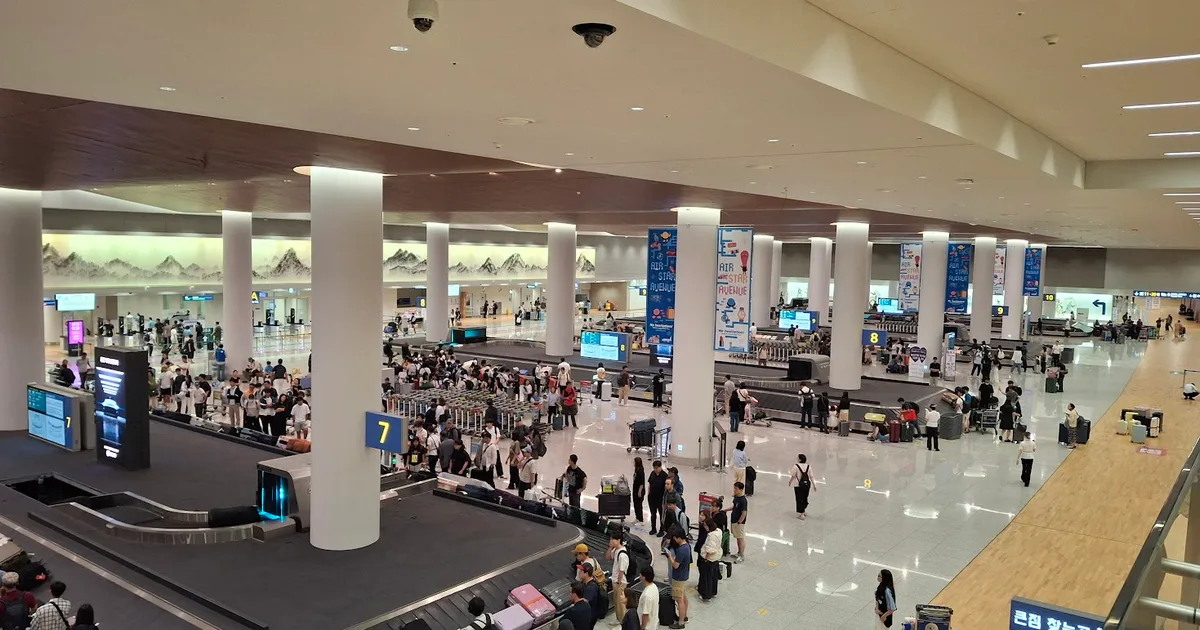
Table of Contents
Two separate Korean government forms, one easy mistake: assuming that completing one covers the other. K-ETA (Korea Electronic Travel Authorization) is a pre-travel screening some visa-free travelers apply for before they fly; the e-Arrival Card is a short entry declaration that becomes available three days before arrival in Korea, based on Korea Standard Time. They come from different parts of the same process, and — critically — being exempt from one does not mean you’re exempt from the other.
This mix-up matters more in 2026 than usual, because Korea extended a temporary K-ETA exemption for many visa-free nationalities through the end of the year. That exemption has quietly created a second wave of confusion: travelers who no longer need K-ETA sometimes assume they’re done with paperwork entirely, then discover at check-in that the separate e-Arrival Card still applies to them.
For the full official step-by-step on each form, Koursea’s South Korea entry forms guide and e-Arrival Card guide walk through the process in detail. This post focuses on the one question those guides get asked most: which form actually applies to you, and when.
What K-ETA Actually Is
K-ETA is a pre-travel authorization, broadly similar in spirit to the US ESTA, for travelers entering Korea without a visa under the country’s visa-waiver arrangements. It is not a visa — an approved K-ETA still leaves the final entry decision to the immigration officer at the airport.
Korea’s Ministry of Justice has extended a temporary exemption from the K-ETA requirement for travelers from the countries and regions that are currently exempt, through December 31, 2026 (Korea Standard Time), according to the official K-ETA notice (verified 2026-10-14). Exactly which countries are covered, and whether that changes again afterward, is precisely the kind of detail that shifts — check the current list directly on www.k-eta.go.kr before relying on anything written elsewhere, including this post.
Practical rule: Even if you’re currently exempt from applying for K-ETA, you can still apply for one voluntarily. The official K-ETA notice states that an approved K-ETA carries one specific benefit: it generally excuses you from also filing the e-Arrival Card. That’s an optional trade-off, not a requirement.
What the e-Arrival Card Actually Is
The e-Arrival Card is a different form entirely: an online entry declaration run by Korea’s Ministry of Justice, submitted through a single official site, www.e-arrivalcard.go.kr. Submission opens three days before your scheduled arrival in Korea, calculated in Korea Standard Time — so the countdown runs from your landing time, not your departure time, which matters most for travelers on overnight or connecting flights that cross a calendar date.
Filing it is free. That’s worth repeating, because it’s also the detail scammers exploit most.
Where the Two Forms Actually Overlap
This is the part that trips people up:
- A traveler entering on a valid, approved K-ETA is generally excluded from also needing the e-Arrival Card.
- A traveler using the temporary K-ETA exemption — meaning they never applied for a K-ETA because their nationality is currently covered — is a different case. Korea’s own e-Arrival Card target guide specifically lists K-ETA-exemption travelers as still needing to file the declaration.
- A traveler who holds a K-ETA but ultimately enters on a visa instead still needs to complete the e-Arrival Card.
In other words: “I don’t need K-ETA” and “I don’t need the e-Arrival Card” are two separate questions, answered by two separate official checkers. The answer to one doesn’t resolve the other.
The Scam Pattern Behind Both Forms
Korean authorities have warned about unofficial sites for both services: the K-ETA notice describes agencies charging more than the official fee, while the Ministry of Justice says any e-Arrival Card site requesting payment information is unofficial. The pattern is consistent enough to be worth memorizing:
- Type the address directly —
www.k-eta.go.krorwww.e-arrivalcard.go.kr— rather than clicking a sponsored search result. - Confirm the domain actually ends in
.go.kr. - Never enter payment details on the e-Arrival Card form; it is free on the official site.
- Treat an unsolicited “support agent” message asking for your passport scan as a scam, regardless of how official it looks.
Once your entry paperwork is sorted, the next practical hurdles are usually connectivity and your first day on the ground — see Koursea’s Korean eSIM guide and First 24 Hours in Seoul arrival plan for what comes next.
Summary Checklist
- Confirm which form — K-ETA, e-Arrival Card, or both — applies to your passport and entry document, using the official sites rather than a blog post.
- If currently K-ETA-exempt, check separately whether you still need the e-Arrival Card.
- Submit the e-Arrival Card no earlier than three days before arrival (Korea Standard Time).
- Apply only at
.go.krdomains, and never pay for a free government service.
If you’d rather not juggle tabs mid-trip, Koursea’s free, zero-login tools can help with everything that comes after you land, from transit routing to offline-friendly neighborhood guides.
Official Sources and Photo Credit
- K-ETA: temporary exemption extended through December 31, 2026
- K-ETA: warning about non-official websites and agencies
- Korea e-Arrival Card guide
- Korea e-Arrival Card declaration targets and exclusions
- Ministry of Justice: warning about fake e-Arrival Card websites
- Cover photo: Incheon Airport Terminal 2 Arrival Hall by AirportTerminalGuy, licensed CC BY 4.0; resized and converted to WebP by Koursea.
